
Briggs & Stratton’s 19 HP engine is a widely utilized power source, supported by extensive manuals and resources, including readily available PDF versions for maintenance and repair.
Overview of the Engine
The Briggs & Stratton 19 HP engine represents a cornerstone of small engine technology, powering a diverse range of outdoor equipment. Its robust design and reliable performance have made it a favorite among homeowners and professionals alike. Accessing the correct operating and maintenance instruction manual is crucial for maximizing its lifespan and ensuring optimal functionality.
These manuals, often available as downloadable PDF files, detail everything from basic operation to complex troubleshooting. Understanding the engine’s components and adhering to the recommended maintenance schedule – including oil changes and air filter cleaning – will prevent costly repairs and extend its service life. Model series 190000 and 280000 are commonly referenced.
Common Applications
Briggs & Stratton’s 19 HP engine is a versatile power source, frequently found in a wide array of outdoor power equipment. Craftsman lawn tractors often utilize this engine, alongside riding mowers and various types of garden machinery. Its power output makes it suitable for demanding tasks like cutting grass on larger properties and powering snow blowers during winter months.
The availability of detailed manuals, including PDF versions, ensures users can confidently maintain and repair equipment powered by this engine. Proper maintenance, guided by these resources, is essential for reliable performance across all applications. Finding the correct manual, using the engine’s model number, is the first step.

Engine Specifications
Briggs & Stratton 19 HP engines feature specific horsepower, torque, displacement, and fuel capacity details, all documented within comprehensive operating and maintenance manuals.
Horsepower and Torque
Understanding the horsepower and torque characteristics of the Briggs & Stratton 19 HP engine is crucial for optimal performance and selecting the right applications. Typically, these engines deliver a consistent 19 horsepower, providing ample power for various tasks.
Torque, the rotational force, is equally important, enabling the engine to handle heavier loads and challenging conditions. Detailed specifications regarding peak horsepower and torque output at specific RPMs are readily available within the official Briggs & Stratton operating and maintenance manuals.
These manuals provide precise data, ensuring users can accurately assess the engine’s capabilities and maintain it for peak efficiency. Knowing these figures aids in troubleshooting and ensuring the engine operates within its designed parameters.
Displacement and Bore/Stroke
The Briggs & Stratton 19 HP engine’s performance is directly linked to its displacement and bore/stroke dimensions. Engine displacement, typically around 344cc, signifies the total volume swept by all pistons during one complete cycle. This impacts the engine’s overall power output.
Bore, the diameter of the cylinder, and stroke, the distance the piston travels, are key specifications found within the official manuals. These dimensions, often listed in inches or millimeters, define the engine’s internal geometry.
Understanding these values is vital for accurate parts replacement and engine rebuilding. Detailed manuals provide precise measurements, ensuring compatibility and proper functionality. Correctly identifying these specifications guarantees optimal engine performance and longevity.
Fuel Type and Capacity
Briggs & Stratton 19 HP engines are designed to operate on unleaded gasoline with a minimum octane rating of 87. Utilizing the correct fuel type is crucial for optimal performance and preventing engine damage, as detailed in the manual. Always refer to the manual for specific fuel recommendations.
The fuel tank capacity typically ranges between 18 to 20 fluid ounces, providing sufficient runtime for many applications. However, the exact capacity can vary slightly depending on the specific engine model.
The manual emphasizes the importance of using fresh fuel and adding a fuel stabilizer when storing the engine for extended periods to prevent fuel degradation and carburetor issues.

Locating Your Engine Model Number
Finding your Briggs & Stratton engine’s model number is essential for obtaining the correct parts and manuals, easily done through online resources.
Importance of the Model Number
The engine model number is absolutely critical when dealing with a Briggs & Stratton 19 HP engine. It serves as a unique identifier, allowing for precise identification of your specific engine configuration. This is paramount when ordering replacement parts, ensuring compatibility and preventing incorrect installations.
Furthermore, the model number unlocks access to the correct operating and maintenance manuals tailored to your engine. Generic manuals may not cover specific features or adjustments relevant to your model. Accurate documentation ensures safe and effective engine care, maximizing its lifespan and performance. Without it, troubleshooting becomes significantly more difficult, potentially leading to costly repairs or even engine failure.
Where to Find the Model Number
Locating your Briggs & Stratton 19 HP engine’s model number is typically a straightforward process. The number is usually stamped or affixed to a label directly on the engine block. Common locations include the valve cover, the blower housing, or near the spark plug.
Carefully inspect these areas; you may need a flashlight to clearly view the label. Online resources from Briggs & Stratton offer visual guides to help pinpoint the exact location based on engine type. If the label is damaged or missing, contacting Briggs & Stratton customer support with details about your equipment can assist in identifying the model number.
Decoding the Model Number
Understanding the Briggs & Stratton model number reveals crucial information about your 19 HP engine. Typically, the number is a combination of numbers and letters. The initial digits often indicate the manufacturing date, while subsequent numbers specify the engine series and specific configuration.
This code helps identify compatible parts and the correct service manuals. Briggs & Stratton provides resources to decipher these codes, ensuring accurate part ordering and maintenance procedures. Knowing the breakdown allows for precise troubleshooting and ensures you’re using the correct information for your specific engine model.
Operating Instructions
Proper operation involves checking oil levels, ensuring adequate fuel, and following the starting procedure detailed in your Briggs & Stratton manual for optimal performance.
Starting the Engine
Before attempting to start your Briggs & Stratton 19 HP engine, ensure the oil level is correct and the fuel tank contains fresh gasoline. Verify the spark plug wire is securely connected. Engage the choke, especially in colder temperatures, to enrich the fuel mixture for easier ignition.
Turn the ignition switch to the ‘ON’ position. Slowly pull the starter rope with a firm, steady motion. Avoid jerking the rope, as this can damage the starter mechanism. Once the engine sputters or attempts to start, gradually disengage the choke. Continue pulling until the engine runs smoothly. Refer to your specific model’s manual for detailed instructions and safety precautions.
Stopping the Engine
To safely stop your Briggs & Stratton 19 HP engine, the most common method is to simply turn the ignition switch to the ‘OFF’ position. This immediately cuts power to the ignition system, halting the combustion process. For engines equipped with a fuel shut-off valve, closing this valve before switching off the ignition can further prevent fuel from reaching the carburetor.
Allow the engine to cool down completely before storing or performing any maintenance. Avoid abruptly stopping the engine under heavy load, as this can cause damage. Always consult your specific engine’s manual for the recommended shutdown procedure and any model-specific instructions.
Safe Operating Procedures
Prioritize safety when operating your Briggs & Stratton 19 HP engine. Always wear appropriate safety glasses or a face shield to protect against debris. Ensure the surrounding area is clear of obstructions and flammable materials. Never operate the engine indoors or in poorly ventilated spaces due to the risk of carbon monoxide poisoning.
Keep hands and clothing away from moving parts, such as the fan and blade. Before starting, inspect the engine for any loose parts or fuel leaks. Familiarize yourself with the location of the emergency stop switch and understand how to use it quickly in case of an emergency.
Maintenance Schedule
Regular upkeep, including oil changes, air filter checks, and spark plug replacements, ensures optimal performance and extends the life of your Briggs & Stratton engine.
Oil Change Procedures
Maintaining proper oil levels is crucial for the longevity of your Briggs & Stratton 19 HP engine. Begin with a warm engine, then carefully drain the old oil using the drain plug or oil pump. Dispose of used oil responsibly at a recycling center.
Next, replace the oil filter with a new one, ensuring a tight seal. Refill the engine with the recommended oil type and quantity, as specified in your engine’s manual – typically around 1.1 quarts.
Always check the oil level with the dipstick before running the engine, adding more if needed. Consistent oil changes, typically every 25-50 hours of operation, will significantly improve engine performance and prevent wear.
Air Filter Maintenance
A clean air filter is essential for optimal engine performance. Regularly inspect the air filter for dirt and debris; a clogged filter restricts airflow, reducing power and efficiency. Depending on operating conditions, cleaning or replacement may be necessary.
For foam filters, wash gently with soap and water, squeeze dry, and lightly oil before reinstalling. Paper filters should be tapped gently to remove loose dirt, or replaced entirely if heavily soiled.
Refer to your Briggs & Stratton 19 HP engine manual for specific filter types and recommended maintenance intervals, typically every 25 hours of use. Proper air filter maintenance extends engine life.
Spark Plug Replacement
Regular spark plug replacement ensures reliable engine starting and efficient combustion. A worn spark plug can cause misfires, reduced power, and increased fuel consumption. Consult your Briggs & Stratton 19 HP engine manual for the correct spark plug type.
To replace, disconnect the spark plug wire, remove the old plug with a spark plug socket, and gap the new plug to the specified distance using a gap tool. Carefully thread the new plug into the cylinder head and tighten to the recommended torque.
Replace spark plugs every 100 hours of operation, or annually, for optimal performance.

Troubleshooting Common Issues
Addressing issues like starting failures, rough running, or overheating is crucial; the Briggs & Stratton manual provides diagnostic steps and solutions for these problems.
Engine Won’t Start
If your Briggs & Stratton 19 HP engine fails to start, several factors could be at play. First, verify the fuel tank isn’t empty and the fuel shut-off valve is open. A common culprit is a fouled spark plug; consult your manual for the correct replacement and gap.
Next, check the air filter for obstructions, as a clogged filter restricts airflow. Ensure the safety interlock switch is functioning correctly. If these steps don’t resolve the issue, the carburetor might require cleaning or adjustment, as detailed in the engine’s operating and maintenance manual. Always refer to the manual for specific troubleshooting guidance related to your engine model.
Engine Runs Rough
A rough-running Briggs & Stratton 19 HP engine often indicates a fuel delivery or ignition problem. Begin by inspecting the spark plug for wear or fouling; a replacement may be necessary. A dirty air filter restricts airflow, causing an imbalance in the fuel-air mixture, so ensure it’s clean.
The carburetor is a frequent source of issues; cleaning it thoroughly can resolve many rough-running conditions. Check the fuel lines for kinks or obstructions. Refer to your engine’s manual for detailed instructions on carburetor cleaning and adjustment, as well as specific troubleshooting steps for your model number.
Overheating Problems
If your Briggs & Stratton 19 HP engine overheats, immediate attention is crucial to prevent damage. A common cause is insufficient cooling, often due to a blocked cooling fan or fins; Ensure these are clean and unobstructed. Low oil levels can also lead to overheating, so verify the oil level and add if needed, consulting your manual for the correct type.
Check the carburetor for proper fuel mixture; a lean mixture can cause excessive heat. Inspect the exhaust system for blockages. Refer to your engine’s manual for specific troubleshooting steps and recommended cooling system maintenance procedures for your particular model.
Carburetor Maintenance
Maintaining the carburetor ensures optimal engine performance; cleaning, adjusting, or replacing it, as detailed in your Briggs & Stratton manual, is often necessary.
Cleaning the Carburetor
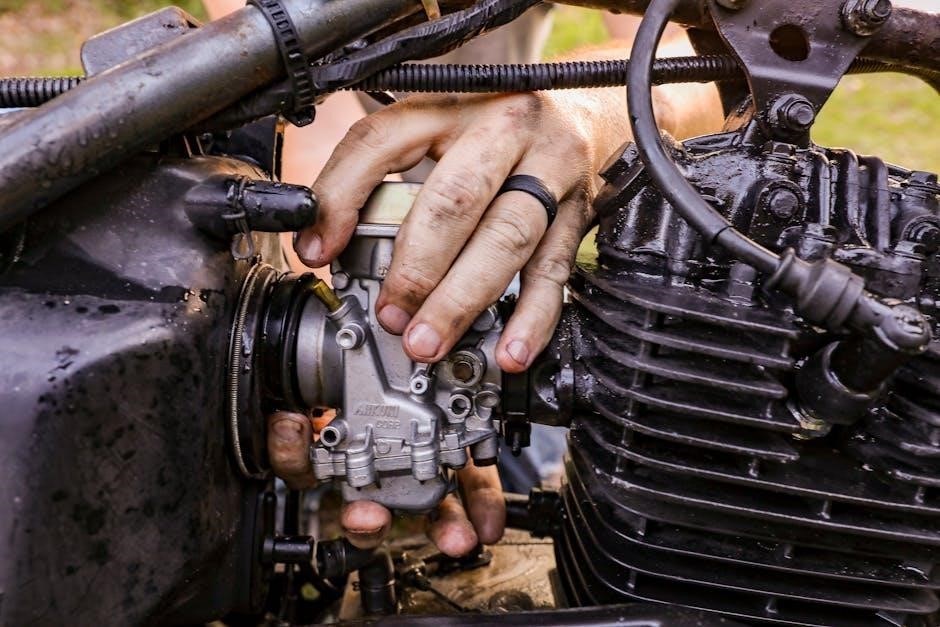
A dirty carburetor is a frequent cause of engine problems. Begin by disconnecting the fuel line and carefully removing the carburetor from the engine, consulting your manual for specifics. Disassemble the carburetor, noting the position of all parts for reassembly. Use carburetor cleaner, following the product’s safety instructions, to thoroughly spray and clean all passages and jets.
Pay close attention to the main jet and emulsion tube, ensuring they are completely clear of debris. Compressed air can assist in clearing stubborn blockages. Inspect the carburetor’s gasket and replace it if damaged. Before reassembling, ensure all parts are dry and clean. Proper cleaning, guided by your Briggs & Stratton manual, restores fuel flow and engine performance.
Adjusting the Carburetor
Proper carburetor adjustment is crucial for optimal engine performance. Refer to your Briggs & Stratton manual for specific adjustment procedures for your engine model. Typically, adjustments involve the idle speed screw and the mixture screw. Start the engine and allow it to warm up. Adjust the idle speed screw to achieve a smooth, stable idle without stalling.
Next, carefully adjust the mixture screw to achieve the highest engine speed. Slowly turn the screw in or out until the engine runs smoothly and responds well to throttle changes. Fine-tune both screws as needed. Incorrect adjustments can lead to poor fuel economy and engine damage, so consult the manual diligently.
Carburetor Replacement
When carburetor cleaning and adjustment fail, replacement may be necessary. Begin by disconnecting the fuel line and any linkages attached to the carburetor. Carefully remove the old carburetor, noting the position of gaskets and mounting hardware. Ensure the replacement carburetor is the correct model for your Briggs & Stratton 19 HP engine – referencing your manual is vital.
Install the new carburetor with new gaskets, tightening the mounting bolts securely. Reconnect the fuel line and linkages, verifying proper operation. Prime the engine and attempt to start it. If it doesn’t start, double-check all connections and consult the manual for further troubleshooting steps.
Finding Briggs & Stratton Manuals
Numerous online resources offer Briggs & Stratton manuals, including downloadable PDFs, facilitating easy access to operating and maintenance instructions for your 19 HP engine.
Online Resources for Manuals
Locating the correct manual for your Briggs & Stratton 19 HP engine is now remarkably simple thanks to a wealth of online resources. The official Briggs & Stratton website provides a comprehensive database where you can search for manuals by entering your engine’s model number. Several third-party websites also specialize in hosting engine manuals, offering a convenient alternative.
These platforms often categorize manuals by engine series, making navigation easier. Websites dedicated to machines and systems engineering frequently archive Briggs & Stratton documentation in PDF format. Remember to verify the manual’s compatibility with your specific engine model to ensure accurate information regarding operation, maintenance, and troubleshooting procedures. Utilizing these online resources saves time and provides immediate access to vital engine information.
Downloading PDF Manuals
PDF manuals offer a convenient and accessible way to access Briggs & Stratton 19 HP engine information. Many online resources, including the official Briggs & Stratton website and specialized machinery archives, provide downloadable PDF versions of operating and maintenance instructions. These files are typically free to download and can be easily stored on your computer or mobile device for offline access.
Before downloading, confirm the manual corresponds to your engine’s specific model series (e.g., 190000, 280000). PDF formats ensure consistent formatting across different devices, making them ideal for viewing diagrams and troubleshooting guides. Having a digital copy readily available simplifies maintenance tasks and provides quick reference during repairs, eliminating the need for a physical manual.
Ordering Physical Manuals
While digital resources are plentiful, some users prefer the tactile experience of a physical Briggs & Stratton 19 HP engine manual. These can be ordered directly from the Briggs & Stratton website, often requiring your engine’s model number for accurate selection. Alternatively, various online retailers specializing in small engine parts and manuals frequently stock these publications.
Physical manuals offer a durable and easily navigable resource, particularly beneficial for those less comfortable with digital formats. Expect a small shipping fee and potential lead time for delivery. Confirm the manual’s compatibility with your specific engine model before ordering to ensure it contains the correct information for maintenance and repair procedures.

Parts and Accessories
Genuine Briggs & Stratton parts and accessories, alongside helpful diagrams, are crucial for maintaining your 19 HP engine, ensuring optimal performance and longevity.
Where to Purchase Parts
Finding replacement parts for your Briggs & Stratton 19 HP engine is thankfully quite straightforward. Numerous online retailers specialize in small engine parts, offering a vast selection of components directly to your door. Popular options include the official Briggs & Stratton website, which provides genuine parts and detailed diagrams.
Additionally, large retailers like Amazon and eBay carry a substantial inventory of Briggs & Stratton parts, often at competitive prices. Local hardware stores and small engine repair shops are also excellent resources, providing expert advice and immediate availability for common replacement items like oil filters, spark plugs, and carburetor components. Always have your engine model number handy to ensure you order the correct parts!
Common Replacement Parts
Maintaining a Briggs & Stratton 19 HP engine often requires replacing certain parts over time. Frequently needed items include air filters, crucial for preventing debris from entering the engine, and spark plugs, which ignite the fuel-air mixture. Oil filters are essential for keeping the engine lubricated and free of contaminants, extending its lifespan.
Carburetor components, like jets and gaskets, may need replacement if the engine runs poorly. Belts, if applicable to your engine’s application, can wear and require changing. Don’t forget fuel lines and fuel filters, ensuring a clean fuel supply. Having these common parts on hand simplifies routine maintenance and minimizes downtime.
Understanding Parts Diagrams
Briggs & Stratton parts diagrams are invaluable tools for identifying components and understanding how they fit together. These diagrams, often found within the engine’s manual or online, provide a visual representation of the engine’s assembly. Each part is typically labeled with a reference number, corresponding to a parts list.
Learning to interpret these diagrams allows for accurate parts ordering and simplifies repair procedures. Pay close attention to exploded views, showcasing how parts relate spatially. Understanding the diagram’s key and symbols is also crucial for successful engine maintenance and repair, ensuring you get the correct replacement parts.