
Understanding whetstone knife sharpening angles is crucial for achieving a razor-sharp edge. Guides‚ like those from SHARPAL and Sharp Pebble‚ aid in maintaining 15-20 degree angles.
Consistent angles‚ around 17-22 degrees‚ are vital‚ while specialized knives may benefit from 10-14 degrees. Mastering this skill unlocks peak performance.
Why Angle Matters in Knife Sharpening
The sharpening angle directly impacts a knife’s performance and longevity. A correct angle creates a durable‚ effective edge. Too shallow‚ and the edge becomes fragile‚ easily chipped during use. Conversely‚ a steeper angle results in a robust‚ but less acute‚ edge‚ requiring more force for cutting.
Angle guides‚ such as the SHARPAL Angle Pyramid‚ help maintain consistency. Achieving 15-20 degrees‚ as recommended by Sharp Pebble‚ is key. Proper angle ensures even wear‚ preventing rounding of the blade shoulder and maximizing sharpness. Consistent angles are paramount for optimal results.
Understanding Blade Geometry
Blade geometry significantly influences the ideal sharpening angle. Western knives typically feature a 20-22 degree inclusive angle‚ suitable for general purpose cutting. Japanese knives‚ designed for precision‚ often utilize shallower angles‚ around 10-15 degrees.
Single bevel knives‚ common in some Asian cuisines‚ demand specific angle considerations. Understanding the existing bevel is crucial before sharpening. Angle guides‚ like those from Sharp Pebble‚ assist in replicating the original geometry‚ preserving the knife’s intended function and performance.

Common Knife Sharpening Angles
Popular whetstone angles include 15‚ 20‚ and 25 degrees‚ catering to diverse blade types. SHARPAL guides offer 14‚ 17‚ 20‚ and 25-degree options.
Selecting the correct angle ensures optimal sharpness and edge retention for various cutting tasks.
15-Degree Angle: For Specialized Knives
A 15-degree angle‚ often utilized with sharpening guides like those from Sharp Pebble‚ is best suited for specialized knives demanding exceptional sharpness. This includes certain Japanese knives and delicate slicing tools.
Maintaining this acute angle requires precision and a stable hand. It creates a very thin‚ refined edge‚ ideal for tasks like filleting fish or preparing sushi. However‚ this edge is more fragile and prone to chipping compared to steeper angles.
Careful honing is essential to preserve this delicate geometry‚ and it’s generally not recommended for heavy-duty chopping or tasks involving hard ingredients.
20-Degree Angle: The Most Versatile Choice
A 20-degree angle represents a sweet spot for all-purpose knife sharpening‚ frequently supported by guides like the SHARPAL Angle Pyramid. It strikes an excellent balance between sharpness and durability‚ making it ideal for most kitchen knives.
This angle provides a robust edge capable of handling a wide range of tasks‚ from slicing vegetables to carving meat. It’s forgiving enough for beginners using whetstones‚ yet capable of achieving a very keen edge with practice.
Guides ensure consistent results‚ and this angle is a solid starting point for those unfamiliar with precise sharpening techniques.
25-Degree Angle: For Heavy-Duty Knives
A 25-degree angle is best suited for knives subjected to tougher tasks‚ like chopping through bone or thicker materials. SHARPAL’s Angle Pyramid guide includes this setting for robust blade preparation. This steeper angle prioritizes edge retention over ultimate sharpness.
Knives used for outdoor activities‚ bushcraft‚ or processing game often benefit from this more durable edge. While not as refined for delicate slicing‚ it withstands abuse better.
Using a guide ensures consistent angle maintenance‚ crucial for maximizing the longevity of a heavy-duty blade’s edge.

Using Angle Guides with Whetstones
Angle guides‚ like SHARPAL and Sharp Pebble options‚ simplify whetstone sharpening. They ensure consistent 15-25 degree angles‚ aiding beginners and experienced users alike in achieving precision.
Types of Whetstone Angle Guides Available
Whetstone angle guides come in various designs‚ each offering unique benefits. SHARPAL’s Angle Pyramid Guide is popular‚ providing four universal angles: 14‚ 17‚ 20‚ and 25 degrees‚ making it versatile for diverse blades.
Sharp Pebble’s Angle Guide offers a simpler approach‚ generally supporting angles between 15 and 20 degrees‚ ideal for many common kitchen knives. Some guides are magnetic‚ attaching directly to the blade‚ while others clamp onto the whetstone itself.
Teflon guides are also available‚ though they may not accommodate extremely shallow angles‚ and are often favored by chefs for precision.
SHARPAL Angle Pyramid Guide
The SHARPAL 196N Angle Pyramid Guide is a widely-used tool for consistent whetstone sharpening. This 2-pack provides four pre-set angles – 14‚ 17‚ 20‚ and 25 degrees – catering to a broad range of knife types‚ from delicate slicers to robust cleavers.
Its pyramid shape securely holds the blade‚ ensuring a stable and repeatable angle throughout the sharpening process. Users appreciate its simplicity and effectiveness in achieving a sharp edge‚ even with limited experience; It’s readily available on Amazon and is a popular choice.
Sharp Pebble Angle Guide
The Sharp Pebble Knife Sharpening Angle Guide offers a versatile solution for achieving precision when using a whetstone. Designed to fit all knife sizes‚ this guide facilitates sharpening angles between 15 and 20 degrees‚ adaptable to various blade types.
Sharp Pebble emphasizes quality control‚ subjecting each guide to durability and functionality tests. It’s praised for its ease of use and ability to help beginners maintain consistent angles‚ leading to a sharper‚ more effective edge. Available on Amazon‚ it’s a reliable aid.
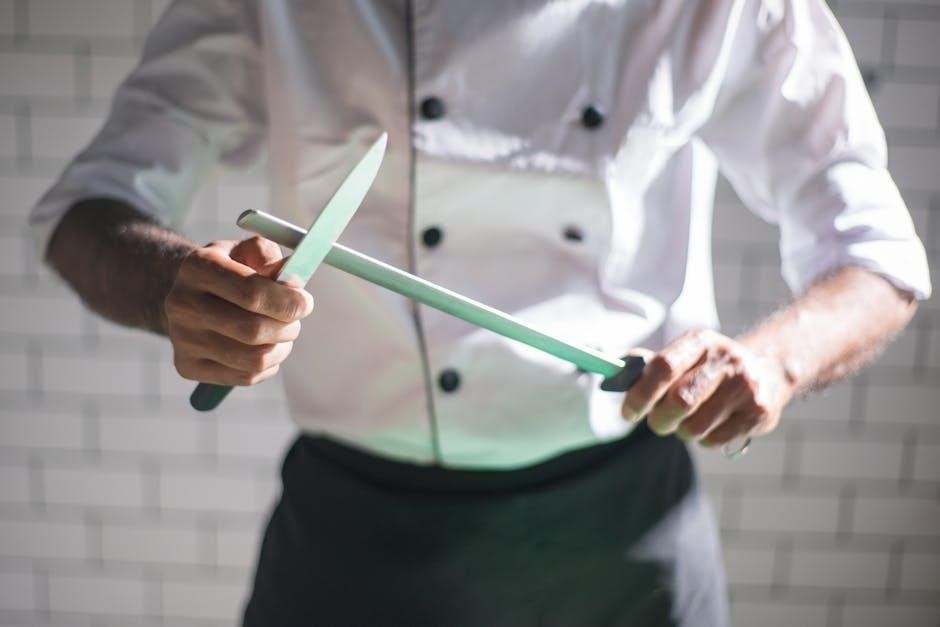
Determining the Correct Angle for Your Knife
Choosing the right angle depends on the knife type; Japanese knives favor 10-15 degrees‚ while Western knives typically use 17-22 degrees for optimal sharpness.
Japanese Knives and Shallow Angles (10-15 Degrees)
Traditional Japanese knives‚ renowned for their exceptional sharpness and delicate cutting ability‚ require a significantly shallower sharpening angle‚ typically ranging from 10 to 15 degrees per side.
This acute angle creates an incredibly fine edge‚ ideal for precise tasks like slicing sashimi or delicate vegetables. However‚ this also means the edge is more fragile and prone to chipping if subjected to harder tasks.
Maintaining this shallow angle consistently is crucial‚ and utilizing angle guides‚ or practicing freehand sharpening with meticulous attention‚ is highly recommended. Reddit discussions highlight aiming for 10 degrees for slicers‚ or 12-15 degrees on single bevel knives.
Western Knives and Standard Angles (17-22 Degrees)
Western-style knives‚ designed for a wider range of kitchen tasks‚ generally benefit from a more robust sharpening angle‚ falling within the 17 to 22-degree range per side. This provides a balance between sharpness and durability‚ making the edge more resistant to rolling or chipping during everyday use.
Instructables emphasizes achieving equal angles on both sides‚ suggesting 17-17 or 22-22 degrees as excellent starting points. This angle is versatile enough for chopping‚ slicing‚ and dicing various ingredients.
Angle guides‚ like those from SHARPAL‚ offer pre-set options within this range‚ simplifying the sharpening process for beginners and ensuring consistency.
Single Bevel Knives: Specific Angle Considerations
Single bevel knives‚ common in Japanese cuisine‚ demand a specialized sharpening approach due to their unique blade geometry. Unlike double-bevel knives‚ they possess an edge formed on only one side‚ requiring precise angle control.
Reddit’s r/chefknives suggests aiming for approximately 10 degrees per side‚ or 12-15 degrees on the bevel itself. Achieving this shallow angle necessitates a steady hand and potentially the use of specialized sharpening tools.
Due to the complexity‚ Teflon guides may not be suitable for extremely shallow angles‚ emphasizing the need for skill and practice.
The Importance of Consistency
Maintaining a consistent angle throughout sharpening is paramount for a uniform edge. Visual cues and guides‚ like SHARPAL’s‚ help achieve this crucial precision for optimal results.
Maintaining a Consistent Angle During Sharpening
Achieving a consistent angle while sharpening with a whetstone demands focused practice. Utilizing angle guides‚ such as the SHARPAL Angle Pyramid or Sharp Pebble guides‚ significantly simplifies this process‚ especially for beginners.
These tools provide tactile and visual feedback‚ ensuring the blade maintains the desired 15-20 degree angle throughout each stroke. Without consistency‚ you risk creating an uneven edge‚ diminishing the knife’s performance.
Remember‚ even slight variations accumulate‚ impacting sharpness and longevity. Regular use of a guide builds muscle memory‚ eventually enabling confident freehand sharpening.
Visual Cues for Angle Control
Sharpening relies heavily on visual assessment‚ even with guides. Observe the bevel – the angled surface leading to the edge – as you draw the blade across the whetstone. Ensure consistent contact across the entire bevel length.
A helpful technique involves using a marker to color the bevel; sharpening will reveal where you’re making contact‚ highlighting inconsistencies. Aim for even removal of the marker.
Guides like those from SHARPAL and Sharp Pebble offer 14‚ 17‚ 20‚ or 25-degree settings‚ providing clear visual references for maintaining the correct angle.
Whetstone Grit and Angle Relationship
Coarse grits demand slightly wider angles for efficient material removal‚ while fine grits allow for refined‚ shallower angles to polish the edge effectively.
Coarse Grit and Angle Adjustment
When utilizing coarse grit whetstones‚ a slightly increased sharpening angle is generally recommended. This adjustment‚ often around 20-25 degrees for Western knives‚ facilitates quicker and more effective removal of damaged steel or reshaping of the blade’s profile.
Maintaining a consistent‚ albeit slightly larger‚ angle prevents digging into the steel and promotes a more controlled grinding process. Angle guides‚ like the SHARPAL pyramid‚ become particularly useful during this stage‚ ensuring uniformity. Remember‚ the goal is material removal‚ not refinement‚ at this stage.
Avoid excessively steep angles‚ as they can round the shoulder of the blade.
Fine Grit and Angle Refinement
Transitioning to finer grit whetstones necessitates a precise return to your target sharpening angle. For most Western knives‚ this means dialing back to 17-22 degrees‚ while Japanese knives often benefit from even shallower angles – around 10-15 degrees.
The focus shifts from material removal to polishing and creating a refined edge. Maintaining consistency is paramount; even slight variations become more noticeable with finer grits. Utilize visual cues and angle guides to ensure accuracy.
Refinement at the correct angle yields a truly razor-sharp and durable edge.
Troubleshooting Common Angle Problems
Inconsistent angles often lead to rounding the blade’s shoulder or creating an uneven edge. Careful attention and guides help correct these issues for optimal sharpness.
Rounding the Shoulder of the Blade
Rounding the shoulder typically occurs when the sharpening angle is too high or inconsistent during whetstone use. This creates a convex edge‚ weakening its sharpness and durability.
Using an angle guide‚ like the SHARPAL or Sharp Pebble options‚ is crucial for maintaining a precise angle throughout the sharpening process.
Focus on keeping the blade flat against the guide and applying even pressure. Correcting this requires re-profiling the edge with a lower‚ consistent angle‚ demanding patience and precision.
Avoid excessive pressure‚ as it exacerbates rounding.
Creating an Inconsistent Edge
An inconsistent edge arises from fluctuating the sharpening angle mid-stroke while using a whetstone. This results in a weak‚ unevenly sharpened blade prone to chipping and poor performance.
Employing an angle guide – such as those from SHARPAL offering 14‚ 17‚ 20‚ or 25-degree options – is vital for maintaining uniformity.
Visual cues and consistent pressure are also key. Regularly check your progress and strive for a consistent bevel; Correcting this often requires significant re-sharpening to establish a uniform edge.
Practice makes perfect!
Advanced Angle Techniques
Mastering freehand sharpening demands precise angle control‚ often aided by a marker to visualize consistency. Teflon guides assist‚ but shallow angles require skill.
Refine technique for optimal results!
Freehand Sharpening and Angle Control
Freehand sharpening‚ while challenging‚ offers ultimate control over the blade’s geometry. It requires developing muscle memory and a keen eye for maintaining a consistent angle throughout each stroke.
Initially‚ using an angle guide is recommended to build this foundational understanding. However‚ transitioning to freehand allows for adapting to subtle blade variations and achieving a truly customized edge.
Visualize the angle – typically 15-20 degrees for most knives – and practice slow‚ deliberate movements. Consistent pressure and a steady hand are paramount for success. Remember‚ even slight deviations accumulate‚ impacting sharpness.
Using a Marker to Check Angle Consistency
A simple yet effective technique for verifying angle consistency involves using a permanent marker. Color the blade’s edge at the intended sharpening angle – generally 15-20 degrees for many knives.
As you sharpen‚ observe where the marker is removed. If it’s evenly distributed along the edge‚ your angle is consistent. Uneven removal indicates angle fluctuations‚ requiring immediate correction.
This method provides visual feedback‚ helping refine your technique and build muscle memory. It’s particularly useful when transitioning from guided to freehand sharpening‚ ensuring accuracy and a refined edge.
Angle Guides vs. Freehand Sharpening
Angle guides‚ like SHARPAL’s‚ offer consistency for beginners‚ while freehand sharpening demands skill. Developing freehand control unlocks precision beyond fixed angles.
Guides assist with 15-25 degree angles‚ but mastery lies in intuitive angle maintenance for optimal results.
Pros and Cons of Using an Angle Guide
Angle guides‚ such as the SHARPAL Pyramid or Sharp Pebble options‚ provide significant benefits for novice sharpeners. They ensure consistent blade angles – typically 15-25 degrees – minimizing errors and promoting a uniform edge. This is particularly helpful when learning proper technique and establishing muscle memory.
However‚ guides have limitations. They may not accommodate extremely shallow angles needed for Japanese knives (10-15 degrees) or single-bevel blades. Furthermore‚ relying solely on a guide can hinder the development of crucial freehand skills‚ limiting adaptability and nuanced control over the sharpening process. Some users find guides cumbersome or restrictive‚ impacting workflow.
Developing Freehand Sharpening Skills
Transitioning from angle guides to freehand sharpening demands practice and focused attention. Begin by visualizing the desired angle – 17-22 degrees for Western knives‚ or shallower for Japanese blades. Utilize visual cues‚ like the blade’s shoulder‚ to maintain consistency.
A helpful technique involves using a marker along the bevel; consistent removal indicates a stable angle. Reddit’s r/chefknives suggests patience. While challenging‚ freehand sharpening fosters adaptability‚ allowing for adjustments based on blade geometry and steel type‚ ultimately yielding superior results.

Recommended Angle Ranges by Knife Type
Optimal angles vary; chef’s knives thrive at 20 degrees‚ paring knives need precision around 15-20‚ and serrated knives require specialized approaches for lasting sharpness.
Chef’s Knives: Optimal Angle
Chef’s knives‚ the workhorses of the kitchen‚ generally perform best with a sharpening angle of 20 degrees. This provides a balance between durability and sharpness‚ suitable for a wide range of cutting tasks.
Maintaining this angle consistently is key; guides from SHARPAL and Sharp Pebble can assist beginners. A 20-degree angle allows the knife to withstand frequent use and maintain a reliable edge for chopping‚ slicing‚ and dicing.
Remember‚ consistency is paramount for achieving professional results. A slight deviation can impact performance‚ so practice and precision are essential when sharpening your chef’s knife.
Paring Knives: Precision Angle
Paring knives‚ designed for intricate work‚ benefit from a slightly steeper sharpening angle than chef’s knives. An angle of 15-20 degrees is generally recommended‚ leaning towards the lower end for maximum precision.
This sharper angle allows for clean‚ controlled cuts when peeling‚ trimming‚ and other delicate tasks. Utilizing an angle guide‚ such as those offered by SHARPAL or Sharp Pebble‚ ensures consistency.
Because paring knives are used for detailed work‚ maintaining a keen edge is crucial; A precise angle contributes to both safety and efficiency in the kitchen.
Serrated Knives: Angle Considerations
Serrated knives present a unique sharpening challenge; traditional whetstone techniques focusing on a consistent angle aren’t directly applicable to the scalloped edge. Instead of sharpening the entire face‚ focus on each individual serration.
Whetstones are generally not recommended for sharpening serrated knives‚ as maintaining the correct angle on each tooth is incredibly difficult. Specialized tools are preferred.
Attempting to use a standard 15-25 degree angle guide will likely damage the blade. Consider professional sharpening or dedicated serrated knife sharpeners for optimal results and longevity.
Resources for Further Learning
Explore online tutorials and sharpening communities like Reddit’s r/chefknives to refine your technique. These platforms offer valuable insights and guidance.
Sharpening forums provide a space to learn from experienced enthusiasts and troubleshoot angle-related challenges effectively.
Online Sharpening Tutorials
Numerous online resources demonstrate whetstone sharpening techniques‚ focusing heavily on angle consistency. YouTube channels offer visual guides‚ breaking down the process step-by-step‚ often showcasing angle guides like those from SHARPAL and Sharp Pebble.
Instructables provides detailed‚ illustrated guides‚ emphasizing the importance of equal angles on both sides of the blade – typically 17-17 or 22-22 degrees for general use. These tutorials often cover troubleshooting common issues‚ such as rounding the blade’s shoulder‚ and achieving optimal angles for different knife types‚ from chef’s knives to specialized slicers.
Websites dedicated to knife care also offer comprehensive tutorials‚ often including information on selecting the correct whetstone grit and adjusting angles accordingly.
Sharpening Communities and Forums
Online forums‚ like those on Reddit (r/chefknives)‚ provide a platform for sharing knowledge and seeking advice on whetstone sharpening‚ including angle selection. Experienced users often discuss the nuances of achieving specific angles – 10-15 degrees for Japanese knives or slicers – and the benefits of using angle guides.
These communities are invaluable for troubleshooting issues‚ receiving feedback on sharpening techniques‚ and learning about different angle guides‚ such as the SHARPAL and Sharp Pebble options. Members frequently share tips on maintaining consistent 15-20 degree angles and avoiding common pitfalls.
Dedicated knife enthusiast groups also offer a wealth of information and support.
Maintaining Your Sharpened Edge
Regular honing preserves the carefully established angle‚ while proper storage protects the blade. Consistent 15-20 degree angles‚ achieved with guides‚ require upkeep for lasting sharpness.
Protecting the edge ensures continued performance.
Regular Honing to Preserve the Angle
Honing isn’t sharpening‚ but it’s vital for maintaining the edge’s alignment and the carefully established angle – typically 15-20 degrees when using a whetstone and guide.
A honing steel realigns the microscopic teeth of the blade‚ correcting minor distortions that occur during use. This prevents the edge from becoming dull prematurely. Frequent‚ light honing – even before each use – is far more effective than infrequent‚ aggressive sharpening.
Using the correct angle‚ guided by memory or a tool‚ ensures you’re not altering the blade’s geometry with each honing session.
Proper Knife Storage to Protect the Edge
Protecting your whetstone-sharpened edge requires mindful storage. Avoid tossing knives loosely into drawers‚ as this causes friction and dulls the blade‚ compromising the carefully achieved 15-20 degree angle.
Knife blocks‚ magnetic strips‚ or sheaths are ideal. These methods prevent blade-on-blade contact and minimize accidental impacts. Consider the angle when storing; avoid pressure that could distort the edge.
Proper storage extends the time between sharpenings‚ preserving the investment in your whetstone work and maintaining peak cutting performance.